Create a Softer Sanctuary Around Grey Sliding Wardrobes
A calm bedroom is not about having lots of space, it is about how the room feels when you walk in at the end of the day. Grey sliding wardrobes are a brilliant starting point, because they already look clean and modern. With the right paint colours, lighting and soft textures, that smart grey can turn into a soothing backdrop instead of feeling flat or cold.
As days get longer and evenings stay lighter, it is a great time to rethink how your bedroom looks in late spring and summer. Grey works beautifully with soft, sunlit tones and gentle layers of light. In this guide, we will look at three simple areas: how to pick paint that suits your shade of grey, how to balance warm and cool lighting, and how to add texture so the room feels calm, cosy and still nicely grown up.
Choosing Calm Paint Tones to Complement Grey Wardrobes
Not all grey sliding wardrobes are the same. Some have a cooler blue or silver look, others are warmer and closer to greige. That little change in undertone can make a big difference once you add paint to the walls.
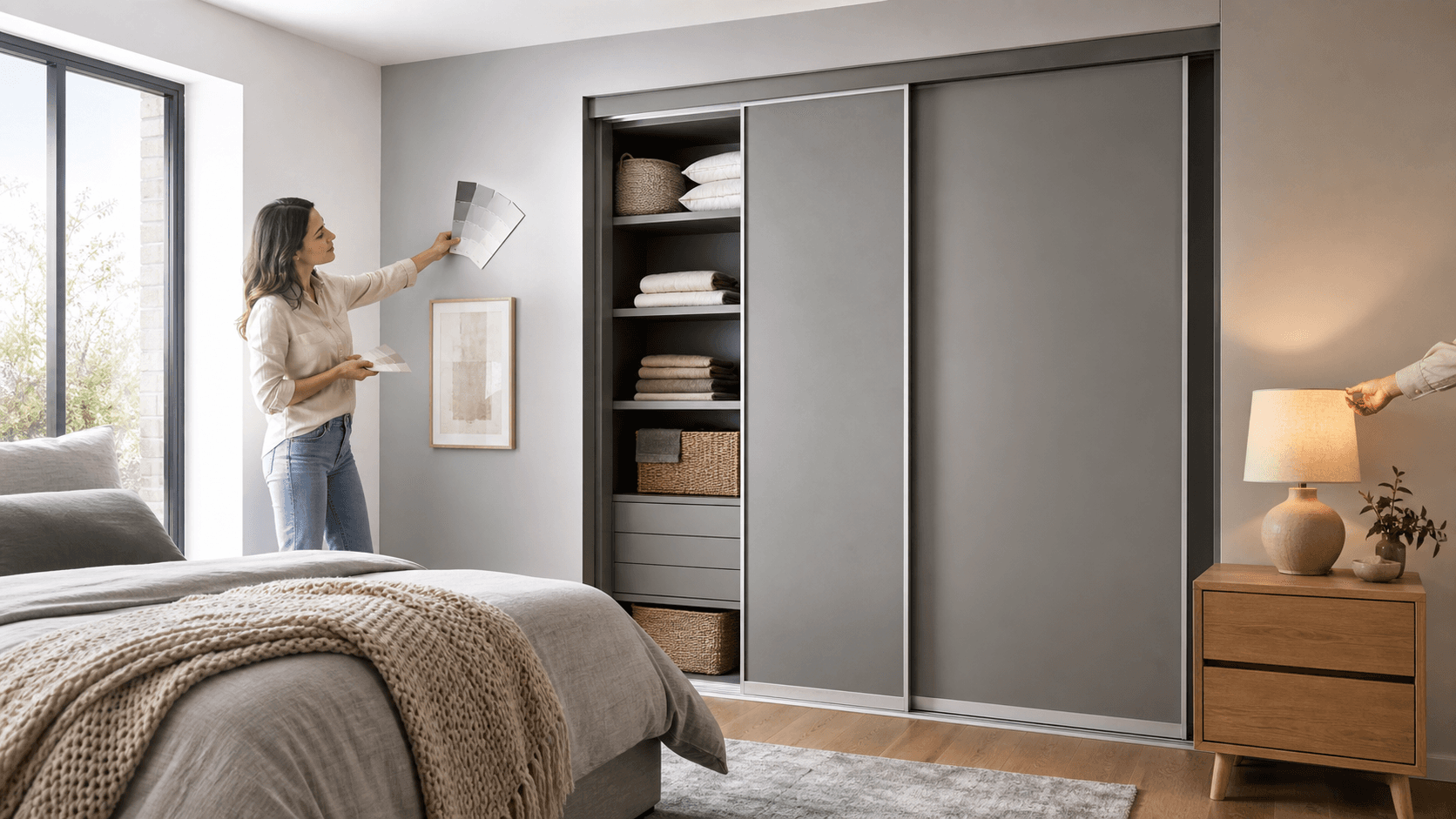
A simple trick is to hold paint swatches right next to the wardrobe panels and check them a few times in the day. Morning light in the UK can feel cool, while evening sun can be warmer and softer. If the grey wardrobe looks slightly blue beside a colour, it is probably a cool match. If it leans more beige, it is sitting in a warmer family.
Calming wall colours that usually work well with grey include:
- Warm off-whites with a creamy hint
- Muted clay or putty neutrals
- Soft sage or eucalyptus greens
- Pale stone or mushroom tones
Each of these gives a different mood. Warm off-whites feel clean but gentle, perfect if you like a bright, hotel-style look. Clay or putty shades feel very cosy, while sage green adds a peaceful, nature-inspired touch that works well with British light and weather. Pale stone tones sit nicely between warm and cool and are easy to live with.
Think about contrast as well:
- Tone on tone: similar grey or soft neutral walls with grey wardrobes keep things very calm and cocooning.
- Gentle contrast: darker wardrobes with lighter walls, or lighter wardrobes with slightly deeper walls, add depth without feeling busy.
For hot summer nights, fresher, cooler tints of white or pale green can make the room feel airy. When winter comes back around, warmer neutrals like clay or greige will help the same grey wardrobes feel snug and inviting, especially when the sky is grey outside.
Balancing Warm and Cool Lighting for Restful Evenings
Paint is only half the story. Lighting decides how both your walls and grey wardrobes actually look. A bedroom works best with layers of light, each with its own job.
We like to think in three layers:
- Ambient lighting: your main ceiling light that fills the whole room.
- Task lighting: focused light for reading in bed or seeing inside your wardrobe.
- Accent lighting: small glow points that highlight a texture, artwork or a corner.
Warm and cool bulbs each have their place. To keep things simple, look at the Kelvin (K) number on the box:
- Warm white: around 2700K to 3000K. This is soft and golden, great for evening wind-down and for making grey look cosy rather than harsh.
- Neutral to cool white: around 3500K to 4000K. This is clearer and brighter, handy for morning routines when you need to see clothing colours properly.
One easy approach is to use slightly cooler bulbs inside or just above your wardrobe so you can see outfits clearly, and warmer bulbs in bedside lamps and main shades for relaxing. If you choose LEDs with the same brand and similar brightness, the mix will still feel balanced.
To avoid a clinical look with grey:
- Use fabric or frosted shades to soften glare.
- Try wall lights that bounce light onto the wall, not straight in your eyes.
- Angle spotlights so they do not shine directly on mirrored doors, which can cause sharp reflections.
Dimmer switches are very helpful in the UK where natural light shifts so much through the year. On bright summer evenings you may want a gentle glow, while darker winter afternoons call for a stronger level. With dimmers, your grey sliding wardrobes will always sit in flattering light.
Soft-Texture Pairings That Keep Grey from Feeling Cold
Grey wardrobes have clean lines that can look smart but sometimes a bit hard. Texture is what brings the comfort back. When the surfaces in the room invite touch, the whole space feels warmer.
Think about mixing a few key textures:
- Boucle or teddy-style cushions on the bed
- Washed linen bedding that looks relaxed, not stiff
- A wool or wool-blend throw at the foot of the bed
- A deep-pile or wool-mix rug underfoot
These work brilliantly with a simple, calming colour palette. Greys usually love:
- Creams and soft whites
- Taupes and light browns
- Blush and muted terracotta
- Dusty blues and soft sea greens
The trick is not to pile in ten colours at once. Pick two or three main shades that suit your wardrobe and wall colour, then play with texture within that palette. For example, a cream linen duvet, a taupe wool throw and a boucle cushion can look layered and rich without feeling busy.
Seasonal changes help the room stay fresh. In spring and summer, lighter linen and cotton with a couple of breathable layers work well, especially on warmer UK nights when heavy duvets feel too much. When temperatures drop, keep your base colours the same but add chunkier knits, maybe a faux fur or sherpa throw, and a thicker rug so the bedroom still feels calm but never stark.
Styling Your Wardrobe Area as a Serene Focal Point
Grey sliding wardrobes naturally pull the eye, so it makes sense to treat them as the main anchor of the room. When the area around them is calm, the whole space feels tidier.
Try to keep surfaces nearby fairly clear. A clutter-free run of doors with simple lines feels peaceful. Then add just a few gentle touches:
- A ceramic lamp on the nearest bedside table
- A small textured tray for everyday jewellery or a watch
- A single plant or vase to soften the strong vertical lines
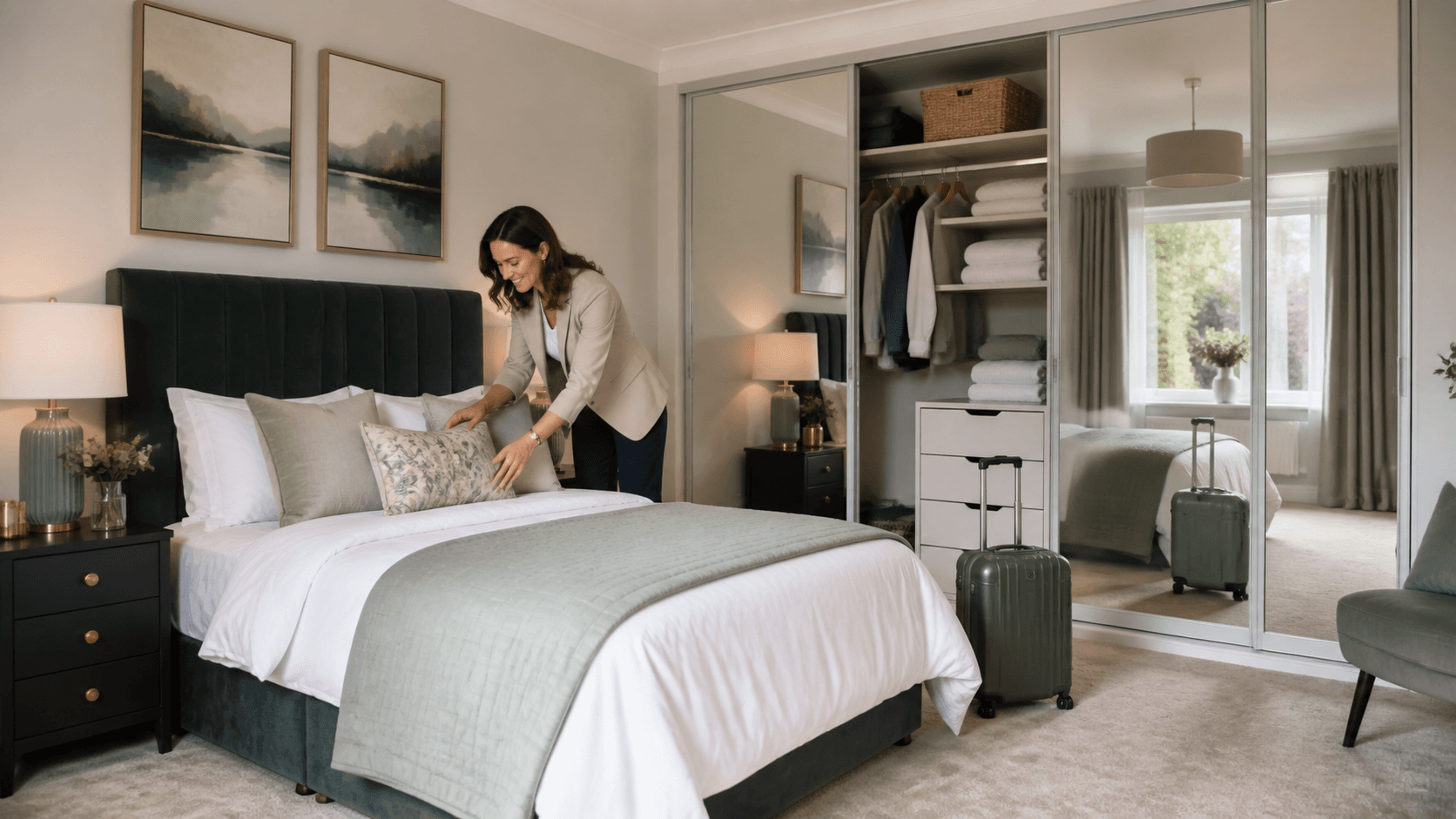
If you have mirrored or hinged sections, aim for quiet styling rather than lots of small pieces. One statement artwork on the wall close by, or a wooden bench at the foot of the bed that echoes the wardrobe handles, can tie everything together. Repeating one or two materials, like warm oak or brushed metal, helps the whole room feel designed, not thrown together.
To keep that tranquil feel going over time, it helps to:
- Wipe wardrobe fronts often so fingerprints and dust do not spoil the calm look.
- Use simple, integrated or motion-sensor lights inside your wardrobe so late-night outfit changes stay soft and sleepy.
- Refresh a few textiles or bedside accents with the seasons, while keeping the core grey wardrobe and main wall colour the same.
Bring Your Calm Grey Bedroom Vision to Life
Turning grey sliding wardrobes into the base of a calm bedroom is really about a clear, simple plan. First, learn the undertone of your grey by pairing it with paint swatches in different light. Next, pick a small family of wall colours that feel good to you, then decide where you need warm and where you need cooler light. Finally, layer in a handful of soft textures in two or three gentle shades, instead of filling the room with lots of extra items.
At Sliding Wardrobes, we see how a well-chosen grey sliding, mirrored or hinged wardrobe can completely change the feel of a room, especially when combined with thoughtful lighting and soft styling. Longer summer evenings are ideal for testing colours and lighting, so you can settle on a look that feels calm long before the darker, cosier nights return.
Transform Your Space With Smart, Stylish Storage Today
If you are ready to make better use of every inch of your room, our grey sliding wardrobes are a practical, modern solution. At Sliding Wardrobes, we work with you to tailor designs that suit your space, style and budget. Share your measurements or ideas and we will guide you through finishes, interiors and layouts that fit your home. If you would like to talk through options or request a quote, simply contact us.